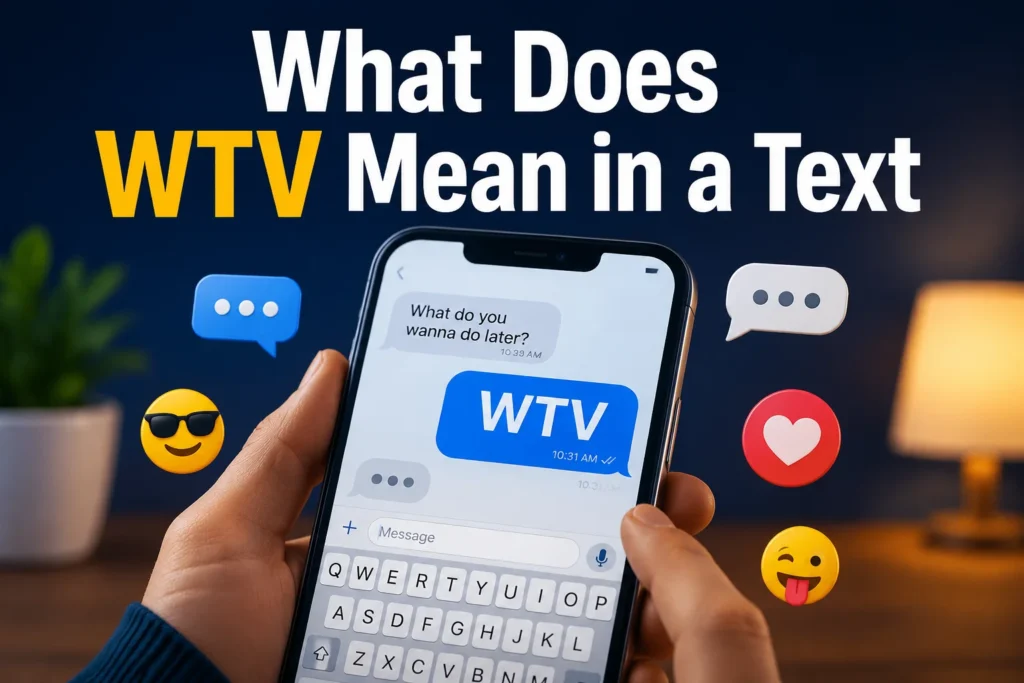
If you have received a message containing “WTV” and wondered what it means, you are not alone. Internet conversations are filled with short forms and abbreviations that can sometimes make simple messages confusing.
The most common meaning of WTV in a text is “Whatever.”
People use WTV as a shorter way to say whatever, especially in casual conversations, social media comments, and online chats. It can express different emotions depending on the situation, including acceptance, indifference, annoyance, or a relaxed attitude.
For example:
“WTV, it’s your choice.”
means:
“Whatever, it’s your choice.”
The meaning can change based on the person, tone, and relationship between the speakers.
A close friend saying “WTV 😂” may sound playful, while someone replying “WTV” during an argument may sound dismissive.
People search for “what does wtv mean in a text” because this abbreviation appears frequently on platforms like TikTok, Instagram, Snapchat, WhatsApp, and gaming chats.
Understanding WTV helps you recognize the emotion behind a message instead of only focusing on the word itself.
WTV Meaning in Text – Quick Meaning
What Does WTV Stand For?
WTV = Whatever
It is an internet abbreviation used instead of writing the full word “whatever.”
The meaning depends heavily on the conversation.
Common Meanings of WTV
WTV can express:
- “Whatever you want”
- “I don’t mind”
- “It doesn’t matter”
- “I don’t care”
- “Anything is okay”
- A casual reaction
Examples of WTV in Text Messages
“WTV you decide.”
Meaning:
“Whatever you decide is fine.”
“WTV, I’m going home.”
Meaning:
“I don’t really care about this situation.”
“Let’s watch WTV you want.”
Meaning:
“Let’s watch whatever you want.”
Why People Use WTV Instead of Whatever
Online communication is usually fast and informal.
Typing “WTV” saves time and matches the short style of digital conversations.
Similar examples include:
- IDK = I Don’t Know
- BTW = By The Way
- TBH = To Be Honest
- LOL = Laugh Out Loud
These abbreviations make texting quicker and more casual.
Origin & Background of WTV
Where Did WTV Come From?
The word “whatever” has been used in English conversations for many years.
Traditionally, people used it to mean “anything,” “no matter what,” or “I do not care.”
As online messaging became popular, longer words and phrases were shortened.
WTV developed as a texting abbreviation because users wanted a faster way to express the same idea.
Cultural Influence
WTV became popular through:
- Text messaging
- Social media platforms
- Online gaming
- Teen conversations
- Internet communities
Young users especially adopted WTV because digital conversations often rely on quick emotional expressions.
Social Media Impact
Platforms like TikTok, Instagram, and Snapchat helped spread WTV.
People often use it in:
- Comments
- Captions
- Replies
- Private messages
Example:
Friend:
“Which outfit should I wear?”
Reply:
“WTV looks good on you.”
Here, WTV means “whatever.”
However, in another situation:
Person A:
“You should apologize.”
Person B:
“WTV.”
The same abbreviation can sound dismissive.
Real-Life Conversations
WhatsApp Conversation
Person A:
Should we order pizza or burgers?
and,
Person B:
WTV you want.
Person A:
Okay, pizza then.
Meaning:
Person B is saying they are okay with either choice.
Instagram DM Conversation
Person A:
Which photo should I post?
Person B:
WTV, both look amazing.
Meaning:
Person B means “whatever you choose.”
TikTok Comment Conversation
Person A:
This trend is getting boring.
Person B:
WTV, I still like it 😂
Meaning:
Person B does not agree but is casually responding.
Text Message Conversation
Person A:
Are you coming to the party?
Person B:
WTV, I haven’t decided yet.
Meaning:
Person B is unsure or not strongly interested.
Emotional & Psychological Meaning of WTV
What Emotion Does WTV Express?
Although WTV is only three letters, it can carry different emotions.
It may express:
- Relaxation
- Acceptance
- Confidence
- Frustration
- Disinterest
- Playfulness
The emotional meaning comes from the surrounding conversation.
Why People Use WTV
People often use WTV because it feels casual and effortless.
Instead of writing:
“I do not have a strong preference.”
they simply write:
“WTV.”
This creates a faster and more natural conversation.
How Tone Changes the Meaning
The same abbreviation can communicate different feelings.
Friendly:
“WTV you want 😊”
Meaning:
“I’m happy with your choice.”
Negative:
“WTV.”
Meaning:
“I don’t want to continue this conversation.”
The punctuation, emojis, and relationship between people all affect the interpretation.
Personal-Style Scenario
Imagine asking a friend:
“Where should we eat tonight?”
They reply:
“WTV, I’m good with anything.”
This probably feels easygoing.
But during an argument, receiving only:
“WTV.”
may feel like the person is ignoring your feelings.
That is why understanding context is more important than memorizing the abbreviation.
Usage in Different Contexts
WTV on Social Media
On platforms like TikTok, Instagram, Snapchat, and X, WTV is commonly used in comments, captions, and direct messages.
People use it when they want to sound casual, relaxed, or unconcerned.
Examples:
“WTV happens, keep going.”
Meaning:
“Whatever happens, keep going.”
“WTV, this video is still funny.”
Meaning:
“I don’t really care what others think; I still enjoy it.”
On social media, WTV often appears with emojis to make the tone clearer.
Examples:
“WTV 😂”
usually sounds playful.
“WTV 🙄”
may sound annoyed or dismissive.
WTV Between Friends and Relationships
Among friends, WTV is often used in a relaxed way.
Examples:
“WTV you want to eat is fine.”
“I’m okay with WTV you choose.”
In close relationships, it can show flexibility and trust.
However, during disagreements, WTV can sometimes sound like someone does not care about the other person’s opinion.
Example:
Person A:
“I’m trying to explain how I feel.”
Person B:
“WTV.”
This may feel rude because it can suggest the person is ending the conversation.
WTV in Professional Settings
WTV is generally not suitable for professional communication.
Avoid using it in:
- Work emails
- Business chats
- Client messages
- Formal discussions
For example:
“WTV option you prefer.”
sounds too casual.
A better professional version would be:
“Please choose whichever option you prefer.”
Clear language is more appropriate in professional environments.
Casual vs Serious Tone
WTV is mostly a casual abbreviation.
Its meaning depends on tone.
Friendly tone:
“WTV works for me 😊”
Meaning:
“I am okay with any option.”
Annoyed tone:
“WTV.”
Meaning:
“I do not want to discuss this anymore.”
The same letters can communicate completely different emotions.
When NOT to Use WTV
Avoid Using It in Formal Situations
Because WTV is internet slang, it may appear unprofessional.
Avoid using it with:
- Teachers
- Employers
- Customers
- New professional contacts
Avoid It During Serious Conversations
If someone is sharing an important feeling or problem, replying only with “WTV” may appear disrespectful.
A thoughtful response is usually better.
Instead of:
“WTV.”
You could say:
“I understand what you mean.”
or:
“Let’s talk about it.”
Avoid Ambiguous Messages
Some people may not know what WTV means.
If the audience is unfamiliar with texting slang, writing the full word “whatever” is clearer.
Cultural Sensitivity
Different people interpret “whatever” differently.
Some see it as a harmless expression, while others consider it dismissive.
Understanding the person and situation is important.
Common Misunderstandings About WTV
WTV Always Means “I Don’t Care”
This is one of the biggest misunderstandings.
WTV does not always mean someone is ignoring you.
Example:
“WTV you choose is fine.”
Here it means:
“Any choice is okay.”
WTV Is Always Rude
WTV can sound rude, but it depends on tone.
Friendly:
“WTV you like ❤️”
Negative:
“WTV.”
The context changes everything.
WTV and Whatever Have the Same Feeling
They have the same basic meaning, but WTV feels more casual and digital.
“Whatever” can sound more direct.
“WTV” feels like texting slang.
WTV Means Something Different on Every Platform
Usually, WTV has the same meaning across platforms.
However, the emotional tone can change depending on the community.
Comparison Table: WTV and Similar Expressions
| Expression | Meaning | Common Usage |
|---|---|---|
| WTV | Whatever | Casual texting and social media |
| IDK | I Don’t Know | Uncertainty or lack of information |
| IDC | I Don’t Care | Showing lack of concern |
| NVM | Never Mind | Changing topic or ignoring something |
| TBH | To Be Honest | Sharing an honest opinion |
| FR | For Real | Showing agreement or seriousness |
| IMO | In My Opinion | Sharing personal views |
Key Insight
WTV is a flexible abbreviation. It can show acceptance, but it can also sound dismissive. The relationship between people, punctuation, and conversation topic determines the real meaning.
Variations and Types of WTV Meaning
1. WTV as “Whatever You Want”
Meaning: Giving someone freedom to choose.
Example:
“WTV you want to watch.”
2. WTV as “I Don’t Mind”
Meaning: Showing that any option is acceptable.
Example:
“WTV is okay with me.”
3. WTV as “I Don’t Care”
Meaning: Showing a lack of interest.
Example:
“WTV, do what you want.”
4. WTV as an Argument Ending
Meaning: Ending a disagreement.
Example:
“WTV, I’m done talking.”
5. WTV as a Relaxed Response
Meaning: A casual way to avoid making decisions.
Example:
“Where should we go?”
“WTV.”
6. WTV in Gaming Chats
Meaning: A casual reaction among players.
Example:
“WTV, let’s play another match.”
7. WTV in Social Media Comments
Meaning: A quick reaction to opinions or trends.
Example:
“WTV, I like this style.”
8. WTV With Emojis
Meaning: Emojis help show the emotion behind the word.
Examples:
“WTV 😂” = playful
“WTV 🙄” = annoyed
9. WTV in Memes
Meaning: Used for humor or exaggerated reactions.
Example:
“WTV, my dog owns the house.”
10. WTV as Internet Slang
Meaning: A modern shortcut used to make conversations faster.
It represents the casual style of online communication.
How to Respond When Someone Uses WTV
Casual Replies
If someone says:
“WTV you want.”
You can reply:
- “Okay, let’s choose this.”
- “Cool, sounds good.”
- “Thanks for letting me decide.”
Funny Replies
For friends:
- “The legendary ‘whatever’ answer 😂”
- “You are too easy to convince.”
- “Classic WTV moment.”
Mature Replies
For serious conversations:
- “I want to make sure we both understand each other.”
- “Can we discuss it instead of leaving it there?”
- “I appreciate your opinion.”
Respectful Replies
If someone seems upset:
- “I understand. Let’s talk later.”
- “I don’t want this to become an argument.”
- “Thanks for sharing your thoughts.”
Regional & Cultural Usage of WTV
Western Culture
In Western online culture, WTV is commonly used by teenagers and young adults in casual conversations.
It is especially common on platforms like:
- TikTok
- Snapchat
- Discord
- Text messaging
Many users understand WTV as a relaxed version of “whatever.”
Example:
“WTV, I’m happy either way.”
In this situation, it usually shows flexibility rather than negativity.
However, in arguments, “WTV” can sometimes be interpreted as someone refusing to listen.
Asian Culture
Among younger Asian internet users, WTV has become familiar because of global social media trends.
People who frequently use English online often understand it immediately.
It is commonly seen in:
- Gaming chats
- Social media comments
- International conversations
However, people who are less exposed to English internet slang may not recognize it.
Middle Eastern Culture
Among younger Middle Eastern users, WTV is often understood through English-based social media communication.
It is commonly used in casual chats with friends.
Because communication styles can vary, some people may see it as a normal shortcut, while others may consider it too casual or dismissive.
Global Internet Usage
WTV has become a worldwide texting abbreviation.
Its meaning remains mostly the same, but the emotional interpretation changes depending on:
- Language background
- Relationship between speakers
- Conversation topic
- Tone of the message
A simple “WTV 😊” and “WTV.” can create completely different impressions.
Generational Differences
Gen Z:
Gen Z users often use WTV naturally in everyday digital conversations.
They may use it casually, humorously, or as a quick reaction.
Millennials:
Many millennials understand WTV but may use “whatever” more often in writing.
Older Generations:
Older users may recognize the word “whatever” but may not immediately understand the abbreviation.
Is WTV Safe for Kids?
WTV itself is not harmful. It is simply a shortened version of the word “whatever.”
Children may encounter WTV in:
- Messages with friends
- Social media comments
- Online games
- Group chats
The abbreviation itself is not a safety concern.
However, parents should help children understand that online communication depends on tone and respect.
Healthy Online Communication Tips
Children should learn:
- Short forms can sometimes be misunderstood
- Words can hurt people even when typed casually
- Respectful communication matters
- Not every online person is trustworthy
For example, teaching children the difference between:
“WTV, choose anything 😊”
and:
“WTV. 🙄”
helps them understand emotional tone.
FAQs About What Does WTV Mean in a Text
What does WTV mean in a text message?
WTV means “whatever.” It is used as a shorter way to say whatever in casual online conversations.
It can mean “anything is okay,” “I don’t mind,” or “I don’t care,” depending on the context.
What does WTV mean on Snapchat?
On Snapchat, WTV usually means “whatever.”
People use it in chats, captions, and replies to express a relaxed attitude or quick reaction.
Is WTV rude?
WTV is not always rude.
It can be friendly:
“WTV you want 😊”
or it can sound dismissive:
“WTV.”
The tone depends on the situation.
What does WTV mean on TikTok?
On TikTok, WTV usually means “whatever.”
Creators and commenters use it to show opinions, reactions, or casual disagreement.
What is the difference between WTV and IDC?
WTV means “whatever” and can suggest flexibility.
IDC means “I don’t care” and usually shows stronger lack of interest.
Example:
“WTV you choose.”
means:
“I’m okay with your choice.”
“IDC.”
means:
“It does not matter to me.”
Can WTV be used in professional messages?
It is better not to use WTV in professional communication.
Formal conversations should use complete words for clarity.
Does WTV mean the same as whatever?
Yes. WTV is simply the shortened texting version of “whatever.”
The meaning stays the same, but it feels more casual and informal.
Conclusion
The meaning of WTV in a text is usually “whatever.” It is a common internet abbreviation used in casual conversations, social media, and messaging apps.
Although WTV has a simple meaning, its emotional meaning can change depending on the situation. It may show acceptance, flexibility, humor, frustration, or even disinterest.
A message like “WTV you want” usually means someone is giving you a choice. However, a short reply like “WTV.” during an argument may feel dismissive.
Understanding online slang is not only about learning abbreviations. It is also about recognizing tone, emotions, and the relationship between people.
When you see WTV in a message, always consider the full conversation before deciding what the person really means.


