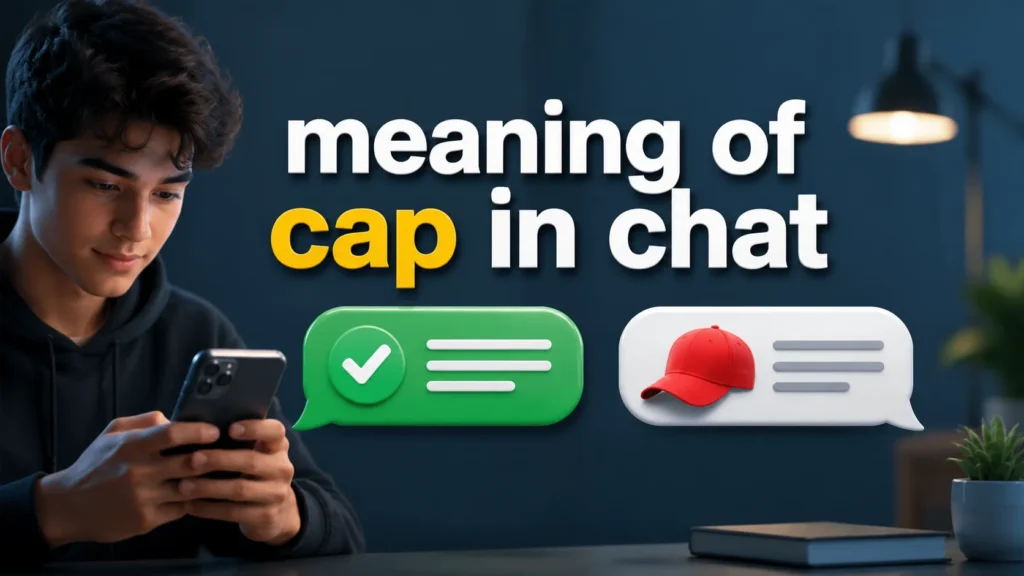
If you spend time on social media, messaging apps, or online communities, you may have seen people write “cap” or “no cap” in conversations.
Many people search for the meaning of cap in chat because the word can be confusing. In traditional English, a cap is a type of hat, but in online conversations, the meaning is completely different.
In chat and internet slang, “cap” means a lie, exaggeration, or something that is not true.
When someone says:
“That’s cap.”
They mean:
“That’s not true” or “You are lying.”
When someone says:
“No cap.”
They mean:
“I’m telling the truth” or “I’m being completely honest.”
This slang expression is especially popular among Gen Z users on platforms like TikTok, Instagram, Snapchat, Twitter/X, and gaming communities.
Understanding this word helps you follow modern online conversations because “cap” is now one of the most recognizable slang terms in digital communication.
Meaning of Cap in Chat – Quick Explanation
Simple Definition of Cap
In online chats:
Cap = a lie, false statement, or exaggeration.
People use it when they believe someone is not being honest.
Examples:
“You got 100% on that test? That’s cap.”
Meaning:
I don’t believe you.
“He said he met a celebrity, but that’s cap.”
Meaning:
I think he is lying.
“No cap, this is the best pizza I’ve ever had.”
Meaning:
I am honestly saying this.
Common Meanings of Cap
In chat, “cap” can mean:
- A lie
- Fake information
- An exaggeration
- Something unbelievable
- A false claim
The meaning depends on the situation and tone.
Cap vs No Cap
These two expressions are opposites.
Cap:
Means someone is lying or exaggerating.
Example:
“Bro said he can run 50 miles without stopping. That’s cap.”
Meaning:
I do not believe him.
No cap:
Means someone is being honest.
Example:
“No cap, that movie was amazing.”
Meaning:
I genuinely mean it.
Examples of Cap in Messages
Example 1
Person A:
“I have a million followers.”
Person B:
“Cap 😂”
Meaning:
Person B thinks Person A is lying.
Example 2
Person A:
“This restaurant has the best burgers ever.”
Person B:
“No cap?”
Meaning:
Are you seriously telling the truth?
Example 3
Person A:
“I finished the whole project in one hour.”
Person B:
“That’s cap.”
Meaning:
That sounds impossible or exaggerated.
Origin & Background of Cap
Where Did Cap Come From?
The slang meaning of “cap” comes from African American Vernacular English (AAVE), where “capping” has been used to describe lying, exaggerating, or pretending.
Over time, the expression spread through:
- Hip-hop culture
- Music lyrics
- Online communities
- Social media platforms
Young internet users adopted the phrase and transformed it into a common digital expression.
Cultural Influence of Cap
Hip-hop and rap culture have had a major influence on modern slang.
Words and phrases that began in specific communities often spread worldwide through:
- Music
- Videos
- Memes
- Influencers
“Cap” became popular because it was short, easy to understand, and useful in quick conversations.
Instead of writing:
“That statement is false.”
People simply write:
“Cap.”
Social Media Impact
Platforms like TikTok and Instagram helped make “cap” globally recognized.
Users started adding it to:
- Comment sections
- Reaction videos
- Memes
- Gaming conversations
Examples:
“Bro is capping.”
“Stop the cap.”
“No cap fr.”
These phrases became part of everyday internet language.
How the Meaning Changed Over Time
Originally, “cap” was closely connected with lying or exaggerating.
Today, it can also express:
- Doubt
- Surprise
- Humor
- Calling out unrealistic claims
For example:
“Your outfit is better than everyone’s? No cap?”
This can be either a serious question or playful teasing.
Real-Life Conversations Using Cap
WhatsApp Conversation
Person A:
I woke up at 4 AM, studied for 10 hours, and finished everything.
and,
Person B:
Bro, that’s cap 😂
Person A:
No cap, I actually did.
Here, one person doubts the claim, and the other insists they are telling the truth.
Instagram DM Conversation
Person A:
This new phone battery lasts for a whole week.
and,
Person B:
That sounds like cap.
Person A:
I swear, no cap.
The conversation uses slang to question and confirm honesty.
TikTok Comment Conversation
Commenter:
This creator made this video in five minutes.
Reply:
No way, that’s cap.
The commenter believes the claim is exaggerated.
Text Message Conversation
Person A:
I can beat anyone in this game.
Person B:
Cap. I defeated you yesterday.
The word is used as friendly competition between friends.
Emotional & Psychological Meaning of Cap in Chat
What Emotion Does Cap Express?
The word “cap” often expresses doubt, humor, disbelief, or playful criticism.
When someone writes:
“That’s cap.”
They are usually challenging the truth of a statement.
The emotional meaning depends on the relationship between the people talking.
Among friends, it is often playful:
“You said you can finish this game in five minutes? Cap 😂”
This is usually teasing, not a serious accusation.
In a serious conversation, however, calling someone’s statement “cap” can sound like saying:
“You are not being honest.”
Why Do People Use Cap?
People use “cap” because online communication is fast and informal.
Instead of writing:
- “I don’t believe you.”
- “That sounds unrealistic.”
- “You might be exaggerating.”
They simply write:
“Cap.”
This makes conversations shorter and gives them a modern internet style.
People also use it because slang creates a feeling of belonging. When people understand the same expressions, they feel connected to the same online culture.
What Does Cap Reveal About Modern Communication?
The popularity of “cap” shows how digital communication has changed language.
Online users often prefer words that are:
- Short
- Memorable
- Easy to type
- Emotionally expressive
A single word like “cap” can communicate an entire reaction.
For example:
Someone writes:
“I slept only one hour but still got the highest score.”
A reply:
“Cap.”
communicates:
“I doubt that happened.”
This type of quick reaction is common in modern online conversations.
Personal-Style Scenario
Imagine a friend messages you:
“I saved enough money to buy a luxury car after one month of working.”
You might reply:
“No cap?”
You are not necessarily accusing them of lying. You are asking:
“Are you seriously telling the truth?”
The phrase creates curiosity while keeping the conversation casual.
Usage of Cap in Different Contexts
Cap on Social Media
Social media is where “cap” is used most often.
People use it in:
- TikTok comments
- Instagram replies
- YouTube discussions
- Twitter/X conversations
Examples:
“This is the best song ever, no cap.”
Meaning:
I honestly think this is the best song.
“He says he never lost a game. Cap.”
Meaning:
I do not believe him.
Cap Among Friends
Friends often use “cap” as playful teasing.
Example:
Person A:
“I never get nervous before exams.”
Person B:
“Cap, you were shaking yesterday.”
The purpose is usually humor, not disrespect.
Cap in Gaming Communities
Gaming communities use “cap” frequently.
Players may say:
- “That damage number is cap.”
- “Your score is cap.”
- “No cap, this update is amazing.”
Gaming culture values quick reactions, making short slang words popular.
Cap in Professional Settings
“Cap” should generally not be used in professional communication.
Avoid using it in:
- Work emails
- Business meetings
- Academic writing
- Formal messages
Example:
Not professional:
“Your report is cap.”
Professional:
“The information in the report may need verification.”
Cap in Dating and Relationships
Young people sometimes use “cap” while discussing relationships.
Examples:
“He said he doesn’t care about attention. That’s cap.”
Meaning:
The speaker thinks he is not being honest.
However, using it seriously in emotional conversations may create conflict.
When NOT to Use Cap
In Formal Communication
Cap is internet slang.
Avoid it in:
- Job interviews
- Workplace emails
- Official documents
- School assignments
Formal communication requires clear language.
When Talking to People Who May Not Understand Slang
Not everyone knows internet expressions.
Older adults, teachers, or international speakers may not understand what “cap” means.
Using standard English avoids confusion.
During Serious Accusations
Calling someone “cap” can feel like accusing them of lying.
Example:
“You are cap.”
This may sound rude during a serious conversation.
A better option:
“I’m not sure that information is correct.”
When Respect Is Important
If discussing sensitive topics, respectful language is better.
Instead of:
“That’s cap.”
Say:
“I think there may be another explanation.”
Common Misunderstandings About Cap
Misunderstanding 1: Thinking Cap Always Means Hat
In normal English:
Cap = a type of head covering.
Example:
“He wore a baseball cap.”
In slang:
Cap = lie or exaggeration.
Example:
“That’s cap.”
The context changes the meaning.
Misunderstanding 2: Thinking No Cap Means No Hat
“No cap” does not mean someone is without a hat.
It means:
“I am being honest.”
Example:
“No cap, this restaurant is incredible.”
Meaning:
I truly mean this.
Misunderstanding 3: Thinking Cap Is Always an Insult
Among friends, “cap” is often playful.
Example:
“You finished that game in two minutes? Cap 😂”
This is usually joking.
Misunderstanding 4: Thinking Only Young People Use Cap
Although popular among Gen Z, many older internet users recognize the term because of social media.
Misunderstanding 5: Confusing Cap With “Caption”
Some beginners think “cap” is short for caption.
However, in slang conversations, it usually refers to honesty or exaggeration.
Comparison Table: Cap and Similar Expressions
| Expression | Meaning | Tone | Example |
|---|---|---|---|
| Cap | A lie or exaggeration | Casual/slang | “That’s cap.” |
| No cap | Honestly/seriously | Casual/slang | “No cap, this is amazing.” |
| Stop the cap | Stop lying or exaggerating | Playful/direct | “Stop the cap, bro.” |
| You’re capping | You are lying | Informal | “You’re capping right now.” |
| For real (FR) | Honestly/seriously | Casual | “FR, this is good.” |
| Truth | Something correct | Neutral | “Tell me the truth.” |
| Fake | Not real | General | “That story is fake.” |
| Lie | False statement | Direct | “That is a lie.” |
Key Insight
“Cap” is a small word with a big meaning in online conversations. It is mainly used to question honesty, challenge exaggerated claims, or show disbelief in a playful way. The meaning depends heavily on tone, relationship, and context.
Variations and Types of Cap in Chat
Internet slang often changes depending on the platform and community. The word “cap” has several common variations that appear in online conversations.
1. Cap
Meaning: A lie, false statement, or exaggeration.
Explanation: Used when someone thinks another person is not telling the truth.
Example:
“That story is cap.”
Meaning:
“That story is not believable.”
2. No Cap
Meaning: Honestly, seriously, or without lying.
Explanation: Used to emphasize that someone is telling the truth.
Example:
“No cap, this is the best movie I’ve watched.”
Meaning:
“I genuinely mean this.”
3. Stop the Cap
Meaning: Stop lying or exaggerating.
Explanation: A popular phrase used when someone thinks another person is making unrealistic claims.
Example:
“Stop the cap, you didn’t finish the whole book in ten minutes.”
4. Capping
Meaning: Lying or exaggerating.
Explanation: The verb form of cap.
Example:
“You’re capping right now.”
Meaning:
“You are not being honest.”
5. You’re Cappin’
Meaning: You are joking, lying, or making things up.
Explanation: This is a more casual spelling used online.
Example:
“Bro, you’re cappin’ 😂”
6. Big Cap
Meaning: A very obvious lie.
Explanation: Used when someone believes a statement is extremely unrealistic.
Example:
“You said you can fly? Big cap.”
7. No Cap Fr
Meaning: I am honestly serious.
Explanation: Combines “no cap” with “fr” (for real) to add emphasis.
Example:
“No cap fr, this restaurant is amazing.”
8. Cap Check
Meaning: Checking whether something is true.
Explanation: Used online when people question a claim.
Example:
“Cap check: Did this actually happen?”
9. Calling Cap
Meaning: Saying that someone is lying.
Explanation: Used when challenging a statement.
Example:
“I’m calling cap on that story.”
10. Remove the Cap
Meaning: Stop exaggerating and be honest.
Explanation: A humorous variation used in online conversations.
Example:
“Remove the cap and tell us what happened.”
How to Respond When Someone Says Cap
The best response depends on whether the person is joking or seriously questioning you.
Casual Replies
If someone says:
“That’s cap.”
You can respond:
- “No way, I’m serious.”
- “I swear it’s true.”
- “Trust me.”
- “I’m not even joking.”
- “No cap.”
Example:
Person A:
“I met a famous singer yesterday.”
and,
Person B:
“Cap.”
Person A:
“No cap, I have pictures.”
Funny Replies
For playful conversations:
- “The cap police have arrived.”
- “Believe it or not, it happened.”
- “You can’t handle the truth 😂”
- “I promise I’m not capping.”
- “My honesty level is 100%.”
Mature Replies
If someone questions you seriously:
- “I understand why it sounds surprising, but it’s true.”
- “I can provide more details if needed.”
- “I’m sharing accurate information.”
Respectful Replies
When avoiding conflict:
- “I see why you might think that.”
- “Let me explain what happened.”
- “There may be some misunderstanding.”
Regional & Cultural Usage of Cap
Western Culture
In the United States, “cap” became popular through African American Vernacular English (AAVE), music culture, and online communities.
Today, it is widely recognized among younger internet users.
Common uses include:
- “No cap.”
- “That’s cap.”
- “Stop capping.”
Asian Culture
In many Asian countries, “cap” is mainly learned through:
- TikTok
- YouTube
- Gaming
- Western entertainment
Young people may understand and use it online, but it is less common in formal English conversations.
Middle Eastern Culture
Among younger social media users, “cap” appears through global internet trends.
It is mostly used in:
- Gaming chats
- Social media comments
- Informal conversations
Professional settings usually avoid it.
Global Internet Usage
Because of social media, “cap” has become an international slang term.
People use it across:
- TikTok
- Discord
- Twitch
- Online games
The meaning remains similar worldwide:
“Is this true or are you exaggerating?”
Generational Differences: Gen Z vs Millennials
Gen Z:
More likely to use “cap” naturally in online conversations.
Example:
“No cap, that was amazing.”
Millennials:
Many recognize the term but may use it less frequently.
They may prefer:
- “Seriously?”
- “Really?”
- “Are you joking?”
Is Cap Safe for Kids?
The word “cap” is generally safe for children to hear and understand.
It is common in:
- Online games
- YouTube videos
- Social media
- Teen conversations
However, parents should explain that slang depends on context.
Children should understand:
- “Cap” does not mean the truth is always false.
- It is often used jokingly.
- It may sound disrespectful in serious situations.
For example:
A child saying:
“That’s cap!”
to a friend during a game may simply be playful.
But saying it to a teacher or adult may sound rude.
Teaching children when and where to use slang helps them communicate respectfully.
Frequently Asked Questions About Meaning of Cap in Chat
What does cap mean in chat?
In chat, “cap” means a lie, exaggeration, or something that is not true.
Example:
“That’s cap.”
Meaning:
“That’s not believable.”
What does no cap mean?
“No cap” means someone is being honest or serious.
Example:
“No cap, this is the best food I’ve tried.”
Meaning:
“I truly mean this.”
Is cap a bad word?
No. Cap is not a swear word. It is casual internet slang, but it may sound disrespectful if used in the wrong situation.
Where did cap slang come from?
The slang meaning of cap developed from African American Vernacular English and became popular through music, social media, and internet culture.
Can I use cap at work?
It is better to avoid using “cap” in professional settings.
Use clearer phrases like:
- “That seems incorrect.”
- “I’m not sure that is accurate.”
- “Can we verify this information?”
What does “stop the cap” mean?
“Stop the cap” means “stop lying” or “stop exaggerating.”
Is cap the same as fake?
They are similar but not identical.
Cap:
Usually refers to a person making a false claim.
Fake:
Can describe something that is not real.
Example:
“That story is cap.”
“The product is fake.”
Conclusion
The meaning of cap in chat is simple: it usually means a lie, exaggeration, or something that does not seem true.
The opposite phrase, “no cap,” means honesty and seriousness.
This slang word became popular because online communities prefer short, expressive words that quickly communicate emotions and reactions.
While “cap” is common among younger internet users, it is important to understand the situation before using it. A phrase that sounds funny among friends may not be appropriate in school, work, or formal conversations.
Language is always changing, and internet slang is a major part of modern communication. Knowing what words like “cap” mean helps you understand online conversations and communicate more naturally.
The most important rule is simple:
Know the meaning, understand the audience, and use slang in the right place.


